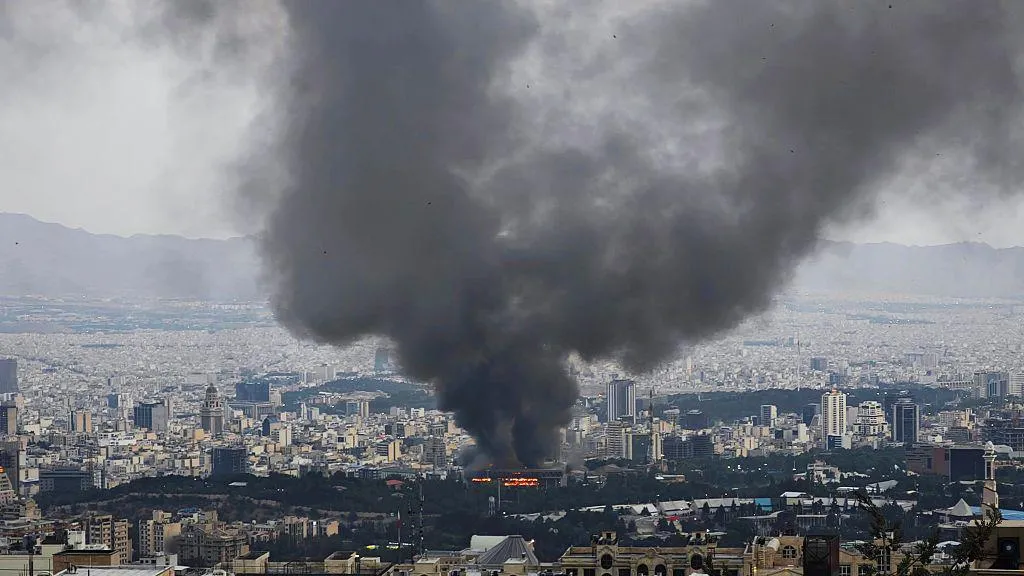
Tensions in the Middle East have sharply escalated after the United States and Israel launched coordinated strikes on several cities across Iran.
US President Donald Trump described the attacks as “major combat operations.” He urged Iranian government forces to surrender and called on the Iranian people to rise up.
Israel stated that the strikes were “preemptive” and necessary for national security.
In response, Iran’s Islamic Revolutionary Guard Corps (IRGC) announced a retaliatory campaign called “Truthful Promise 4.” The group said it is targeting US bases and assets across the Middle East.
The escalation follows weeks of rising tensions and stalled negotiations over Iran’s nuclear programme.
United Nations Calls for Immediate Ceasefire
The United Nations quickly reacted to the crisis.
UN Secretary-General Antonio Guterres strongly condemned the military escalation. He warned that the use of force by the US and Israel — followed by Iran’s retaliation — threatens international peace and security.
He called for an immediate ceasefire and urged all sides to de-escalate. According to him, failure to act could trigger a wider regional conflict with devastating consequences for civilians.
An emergency meeting of the UN Security Council has been scheduled.
UN Human Rights Chief Volker Turk also urged restraint. He stressed that civilians suffer the most in armed conflicts and must be protected under international law.
Oman Expresses Disappointment
Oman’s Foreign Minister, Badr Albusaidi, said he was “dismayed” by the strikes.
Oman had been mediating recent US-Iran nuclear talks. Albusaidi said the attacks undermine diplomatic efforts. He urged the United States not to get further involved, adding, “This is not your war.
Iran Condemns the Strikes
Iran’s Foreign Minister, Abbas Araghchi, described the US-Israel operation as “wholly unprovoked, illegal, and illegitimate.”
He accused President Trump of prioritising “Israel First” over “America First.” Tehran has vowed to continue its retaliation if attacks persist.
UK, France and Germany Urge Negotiations
The leaders of the United Kingdom, France, and Germany issued a joint statement.
UK Prime Minister Keir Starmer, French President Emmanuel Macron, and German Chancellor Friedrich Merz urged Iran to seek a negotiated solution.
They clarified that their countries were not involved in the strikes. However, they remain in close contact with international partners, including the US and Israel.
The three leaders repeated their demand that Iran end its nuclear and missile programmes. They also called on Tehran to stop destabilising activities in the region.
Starmer confirmed that British aircraft are conducting defensive operations to protect UK interests.
Macron warned that the escalation could have “grave consequences” for global peace. Germany confirmed it had been informed in advance of the attack
European Union Describes Situation as “Perilous”
EU foreign policy chief Kaja Kallas said the situation is “perilous.”
She emphasised that the European Union supports diplomatic solutions. The EU has already imposed strong sanctions on Iran.
Kallas stressed that protecting civilians and respecting international humanitarian law must remain top priorities.
Saudi Arabia Condemns Iranian Retaliation
Saudi Arabia strongly condemned Iran’s retaliatory strikes on Bahrain, the UAE, Qatar, Jordan, and Kuwait.
The Saudi government described Iran’s actions as “blatant aggression.” It pledged full support to the affected countries.
Russia Calls Strikes “Reckless”
Russia criticised the US-Israeli strikes.
The Kremlin labelled the move “reckless.” Russian officials argued that the attacks happened while nuclear negotiations were still ongoing. They urged the international community to assess what they called irresponsible actions that threaten regional stability.
Other Global Reactions
Italian Prime Minister Giorgia Meloni said Italy will consult allies to help reduce tensions.
Brazil condemned the strikes and expressed “grave concern.”
Australian Prime Minister Anthony Albanese stated that Australia supports US efforts to prevent Iran from acquiring nuclear weapons.
Statements from the US and Israel
President Trump said the objective of the operation is to eliminate imminent threats from Iran and prevent the country from developing nuclear weapons.
He advised Iranian civilians to stay indoors. Later, he encouraged them to take control of their government.
Israeli Prime Minister Benjamin Netanyahu echoed this message. He urged Iranians to seek a “free and peaceful” future and thanked the US for its support.
Growing Fears of Regional War
The situation remains highly tense.
Many analysts fear that continued retaliation could expand into a broader regional conflict. World leaders are urging restraint and renewed diplomatic efforts to prevent further escalation.