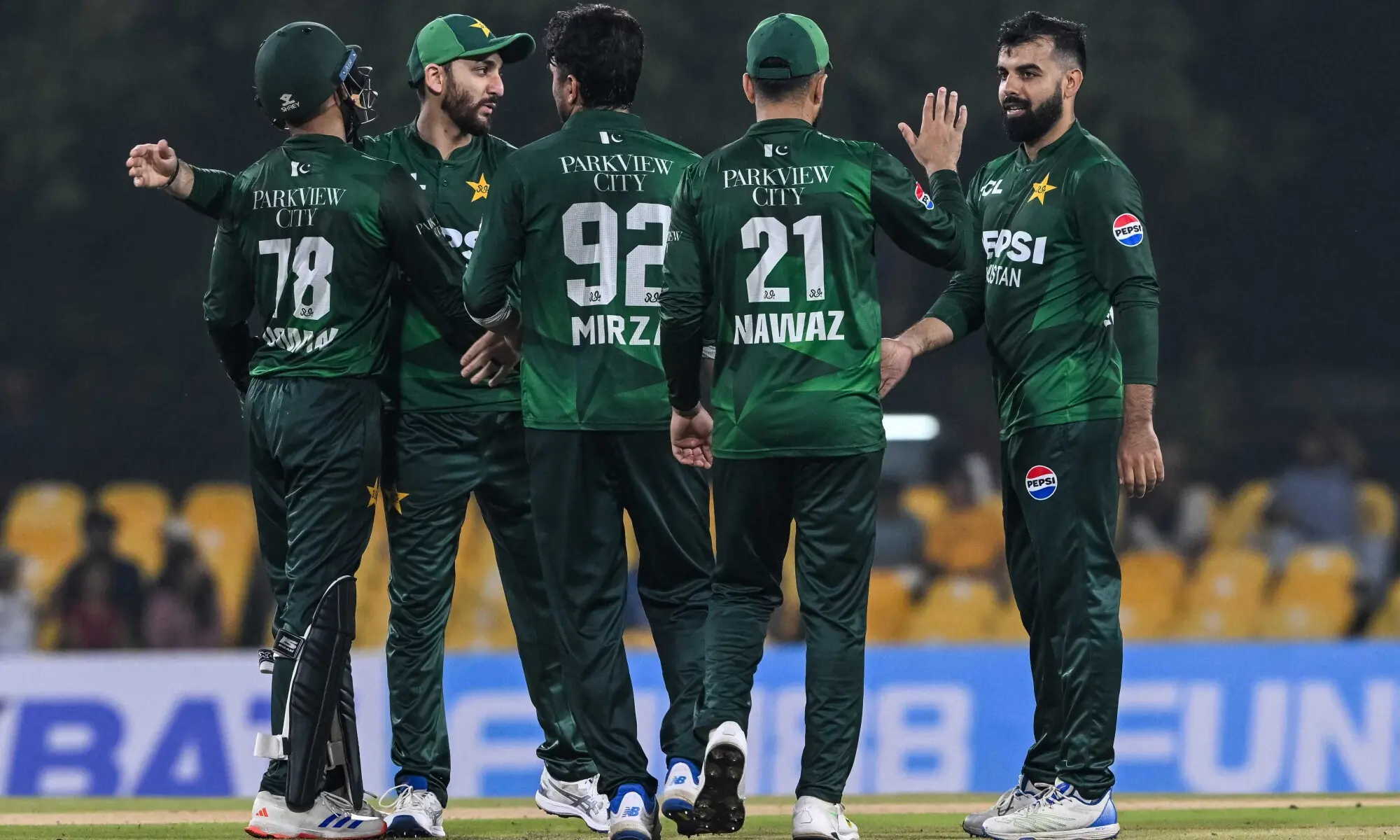
Pakistan got exactly what they wanted on Wednesday in Dambulla: early wickets, relentless pressure through the middle overs, and a statement performance from a returning star.
After winning the toss and choosing to bowl, Pakistan bundled Sri Lanka out for 128 in 19.2 overs in the first T20I of the three-match series—setting the tone for what’s being billed as a key dress rehearsal ahead of the 2026 T20 World Cup, which begins on February 7.
Early Strikes Put Sri Lanka on the Back Foot
Sri Lanka’s innings never truly settled. The hosts lost opener Kamil Mishra for a three-ball duck, trapped early by Salman Mirza, and the pressure only grew from there. Wasim then removed Pathum Nissanka for 12 (12), leaving Sri Lanka scrambling to rebuild.
With the openers gone, Pakistan’s bowlers squeezed hard—backing up their breakthroughs with sharp spells that didn’t allow the middle order to breathe. Sri Lanka kept losing wickets in clumps, and the momentum stayed firmly with the visitors.
Janith Liyanage Fights—But Pakistan Stay Ruthless
The only real resistance came from Janith Liyanage, who tried to drag Sri Lanka into something respectable with a gritty 40 off 31. He stitched together brief partnerships with Wanindu Hasaranga (18) and skipper Dasun Shanaka (12), giving the crowd a glimpse of a comeback.
But just as the innings threatened to stabilize, Pakistan struck again—Abrar removed Liyanage, and Sri Lanka’s hopes fell away with him.
Shadab Khan Returns and Delivers Immediately
The standout storyline? Shadab Khan’s return.
Back in action after recovering from shoulder surgery, Shadab marked his comeback by striking twice, instantly adding bite to Pakistan’s attack and reinforcing why he’s such a key piece in their World Cup plans. His last national appearance was in June 2025, and this was a reminder of what Pakistan have missed.
Pakistan’s Bowling Card Looks Mean
Pakistan’s bowlers shared the spoils, but two names stood tallest:
- Salman Mirza: 3 wickets
- Abrar: 3 wickets
- Shadab Khan: 2 wickets (on return)
It was the kind of all-round bowling effort teams love: early damage up top, smart control in the middle, and no let-up at the end.
Why This Series Feels Bigger Than a Bilateral
With the 2026 T20 World Cup around the corner—and both teams set to play their group and potential Super 8 matches in Sri Lanka—this series is being treated like a real measuring stick.
Pakistan, led by Salman Ali Agha, come in with decent recent form after winning a home tri-series involving Sri Lanka and Zimbabwe. That said, Agha’s own returns have raised questions: he hasn’t been in top batting form, and he’s never played a T20I in Sri Lanka.
On the other side, Sri Lanka have been reshaping after a miserable tour of Pakistan, where the camp reportedly struggled and former skipper Charith Asalanka even had to leave due to illness. A new selection panel is now in place, and Dasun Shanaka has taken over leadership duties—meaning Sri Lanka will be desperate to respond quickly after this collapse.
What’s Next?
Sri Lanka will need more solidity at the top and better control of the middle overs if they want to level the series. Pakistan, meanwhile, will feel encouraged: the bowlers look sharp, and Shadab’s return could be a major boost as the World Cup approaches.In the first T20I of the three-match series against Sri Lanka on Wednesday, the visitors produced a disciplined, wicket-taking bowling performance to dismiss the hosts for 128 in 19.2 overs. The headline moment belonged to Shadab Khan, who marked his return from shoulder surgery with a sharp two-wicket spell, instantly reminding everyone what Pakistan gain when he’s fit and firing.
Pakistan win toss, choose control
With an eye on conditions in Dambulla and the bigger picture of the 2026 T20 World Cup, Pakistan won the toss and opted to bowl first. It was a decision that immediately paid off. Pakistan’s approach was simple: hit the right lengths early, attack the stumps, and keep Sri Lanka from building any rhythm.
Sri Lanka’s reply began in the worst possible way. Opener Kamil Mishra was sent back for a three-ball duck, beaten by the pressure of a new-innings spell from Salman Mirza, who struck before Sri Lanka could settle. Just as the hosts tried to reset, Wasim removed Pathum Nissanka for 12 off 12 balls, leaving Sri Lanka two down and searching for stability.
Early wickets, then the squeeze
Those early losses did more than dent the scoreboard—they altered the entire tempo of the innings. Sri Lanka, already behind the rate, couldn’t take risks without losing more wickets. Pakistan, sensing that hesitation, tightened the net in the middle overs and forced mistakes.
Wickets fell quickly and in clusters, preventing any meaningful partnership from developing. Sri Lanka’s platform never truly formed, and every time a batter attempted to change gears, Pakistan had an answer. The bowlers mixed pace well, stayed accurate with their lines, and fielders backed them up by staying alert and energetic.
It was the sort of innings where the batting side keeps thinking a recovery is just one big over away—only to watch the next wicket arrive first.
Liyanage shows fight, but Pakistan stay ruthless
Amid the collapse, Janith Liyanage provided the clearest resistance. He played with purpose, tried to rotate strike, and looked for scoring options rather than simply surviving. His 40 off 31 balls was the most convincing contribution of the innings, and for a brief window it looked like he might drag Sri Lanka towards a competitive total.
Liyanage stitched together partnerships with Wanindu Hasaranga (18) and captain Dasun Shanaka (12). Those stands weren’t huge, but they mattered—because Sri Lanka needed someone to absorb the pressure while still keeping the score moving.
But just when Sri Lanka seemed set for a late push, Pakistan struck again. Abrar dismissed Liyanage, effectively cutting off the one batting thread holding the innings together. From there, the remaining wickets fell without much resistance, and Sri Lanka were wrapped up for 128 with four balls still unused.
Mirza and Abrar lead the way
Pakistan’s bowling card read like a complete team effort, but two names stood out at the top: Salman Mirza and Abrar, who both claimed three wickets apiece. Mirza set the tone by striking early, and Abrar ensured Sri Lanka couldn’t rebuild by breaking partnerships at key moments.
And then there was Shadab.
Shadab’s return adds bite to Pakistan’s attack
Shadab Khan’s comeback was one of the major talking points heading into the match. Returning after shoulder surgery, he entered this series with both expectation and uncertainty—match fitness, rhythm, and confidence can take time after a long layoff.
Not for Shadab.
He returned and struck twice, making his impact felt immediately. Even more important than the wickets was what his spell represented: control in the middle overs, the ability to disrupt a set batter, and a proven big-match temperament—exactly the combination Pakistan will want as the World Cup approaches.
Shadab last played for Pakistan in June 2025, and this outing looked like a smooth step back into the frame rather than a slow reintroduction.
Why this series matters more than usual
On paper, a three-match bilateral series is just another stop on the calendar. In reality, this one carries extra weight.
Both teams are in “tuning mode” for the 2026 T20 World Cup, which begins on February 7. Pakistan are slated to play the Netherlands in the tournament’s opening match, and the tournament structure makes this Sri Lanka series an ideal rehearsal: both Sri Lanka and Pakistan are expected to play their group fixtures—and potentially Super 8 matches—on the island, assuming qualification.
That means conditions, venue behavior, and tactical planning in Sri Lanka are not side details. They’re central to how teams prepare.
Pakistan’s form, leadership, and question marks
Pakistan arrive with decent momentum. Under captain Salman Ali Agha, they recently won a home tri-series featuring Sri Lanka and Zimbabwe. However, Agha himself hasn’t been in the best batting touch, and this tour presents a unique challenge: he has never played a T20I in Sri Lanka, and his numbers against Sri Lanka are modest—82 runs in four innings at a strike rate of 126.
For Pakistan, that creates an interesting subplot. The team looks settled and confident, but their leadership will be tested in unfamiliar conditions, against opponents who know these surfaces well.
Sri Lanka rebuilding after a rough tour
Sri Lanka, meanwhile, are still in a reset phase. Their tour of Pakistan was described as a disaster, with morale reportedly affected and former skipper Charith Asalanka having to leave due to illness. Since then, the selection panel has changed, and Dasun Shanaka has returned as captain.
Shanaka’s role is crucial—not only for leadership, but also for balance in the batting order. He’s expected to operate in that lower-middle role, striking at around 120 at No. 6, and guiding the team through pressure phases.
The takeaway from Game 1
Sri Lanka’s 128 wasn’t just a low total—it was the product of Pakistan controlling the innings from ball one. Early wickets created doubt, disciplined bowling created pressure, and timely strikes ended any chance of a late surge.
For Pakistan, it’s the kind of performance that builds confidence quickly: Mirza and Abrar delivered, Shadab returned with impact, and the team’s World Cup preparations got a significant boost.
For Sri Lanka, the message is equally clear: if they want to compete in this series, the top order has to survive the early burst, and the middle order must convert starts into something substantial.
The series is still young—but after the first night in Dambulla, Pakistan have already set a firm tone.