Best Business Ideas in Pakistan With 50,000 Rupees: Low-Investment Ideas for 2026
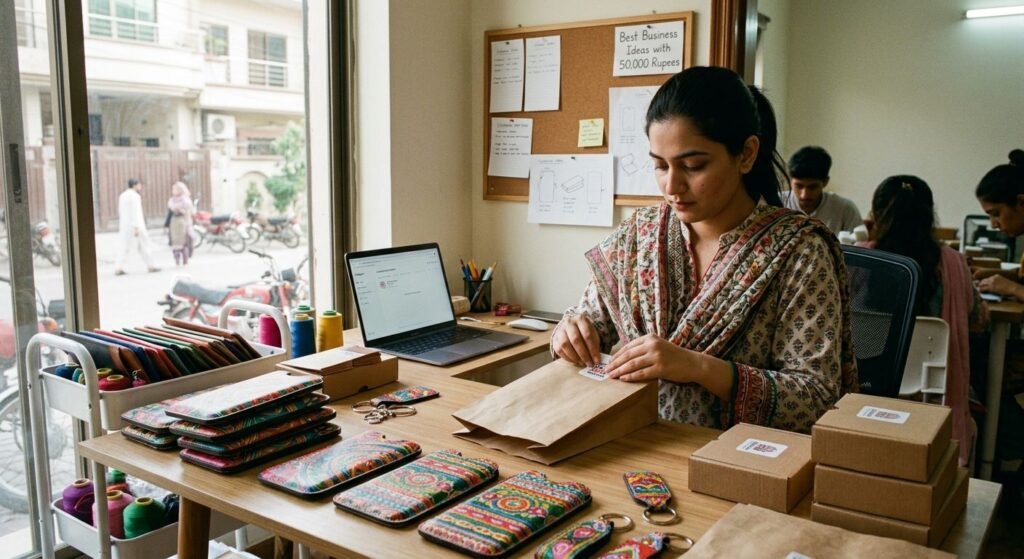
Starting a business in Pakistan does not always require millions of rupees, a large office, or a team of employees. With Rs. 50,000, it is possible to start a small business if you choose an idea with low overhead costs and use your money carefully.
The key is not simply finding the “most profitable” business. A good small business should match your skills, local demand, available time, and ability to reach customers.
From online services and reselling to home-based food and customised products, there are several businesses that can be tested on a relatively small budget.
In this guide, Cliks.pk explores some of the best business ideas in Pakistan with 50,000 rupees, including how each idea works, what you may need to start, and where your initial budget could be spent.
Can You Really Start a Business With Rs. 50,000 in Pakistan?
Yes, but expectations need to be realistic.
Rs. 50,000 is generally not enough for a conventional retail shop with significant rent, inventory, staff, utilities and furnishing costs. It can, however, be enough to test a home-based, online, service-based or small-scale trading business.
The smartest approach is to keep fixed costs low.
Instead of spending your entire budget before making the first sale, start small, test whether customers are interested, and reinvest part of the revenue into growing the business.
Your Rs. 50,000 could potentially be divided between basic equipment or stock, packaging, marketing, transportation and an emergency reserve.
Actual costs vary significantly by city, supplier, product quality and business model, so the figures below should be treated as examples rather than guaranteed startup costs.
1. Online Clothing Reselling Business
Clothing is one of the easiest product categories to understand, and you don’t necessarily need to manufacture clothes yourself.
You can purchase selected items from wholesalers and sell them through Instagram, Facebook, WhatsApp or an online store.
Instead of buying dozens of designs, start with a small collection within a particular niche.
For example, you could specialise in women’s casual wear, modest clothing, children’s clothes, men’s T-shirts or accessories.
A possible starting budget might look like:
| Expense | Example Budget |
|---|---|
| Initial stock | Rs. 25,000 |
| Packaging | Rs. 5,000 |
| Product photography/setup | Rs. 3,000 |
| Marketing | Rs. 10,000 |
| Reserve | Rs. 7,000 |
| Total | Rs. 50,000 |
You could reduce the initial stock requirement further by working with suppliers who allow you to purchase in smaller quantities.
The biggest risk is buying inventory that doesn’t sell. Test demand before investing heavily in a particular style.
2. Home-Based Food Business
If you can cook or bake well, a home-based food business can be started without renting a restaurant.
Instead of offering a huge menu, choose a speciality.
Examples include homemade lunch boxes, frozen samosas and rolls, cakes, brownies, cookies, parathas or office meals.
A focused menu makes purchasing ingredients and maintaining consistent quality easier.
Start by selling within your neighbourhood, university, office network or local community.
WhatsApp and social media can be used to take orders, while local delivery services may help with distribution where available.
Food businesses also need careful attention to hygiene, safe preparation, storage, packaging and any applicable local food-business requirements.
3. Mobile Accessories Reselling
Mobile accessories are another business that can be tested with limited stock.
Products could include phone cases, charging cables, screen protectors, stands and other inexpensive accessories.
Rather than renting a shop immediately, sell through social media, marketplaces or your personal network.
The advantage is that many accessories have relatively low individual purchasing costs.
However, competition can be intense.
Try specialising—for example, accessories for popular iPhone models, Samsung devices or aesthetically designed phone cases—rather than selling exactly the same generic inventory as everyone else.
4. Customized Gift Business
Personalised gifts can be marketed for birthdays, weddings, anniversaries, graduations and corporate events.
You could sell customised mugs, frames, gift boxes, keychains, T-shirts or printed accessories.
Importantly, you don’t necessarily need to buy expensive printing equipment at the beginning.
You can take orders from customers and outsource production to a local printing vendor. Your business then focuses on design, customer acquisition, packaging and order management.
Once order volume becomes sufficient, you can consider purchasing your own equipment.
This approach can keep initial investment considerably lower.
5. Social Media Management Service
Not every Rs. 50,000 business needs physical inventory.
If you understand Instagram, Facebook, TikTok, Canva and basic digital marketing, you could offer social media management to small Pakistani businesses.
Potential clients include restaurants, salons, clinics, gyms, local stores, real-estate agents and other small businesses.
Your services might include content planning, basic graphics, captions, publishing and performance reporting.
If you already own a laptop and smartphone, most of your initial budget can remain untouched.
Spend money only where necessary—for example, internet access, selected software, portfolio development and client acquisition.
Service businesses can be attractive at this budget because there is no unsold physical inventory.
6. Graphic Design Business
Graphic design can also be started as a service-based micro-business.
You could provide social media graphics, restaurant menus, flyers, YouTube thumbnails, presentations, advertisements and basic branding materials.
Beginners can use Canva while developing stronger design fundamentals and learning professional tools as required.
Rather than advertising:
“I am a graphic designer.”
create a specific offer, such as:
“I design monthly social media content for restaurants.”
A specific service is easier for potential customers to understand.
Your Rs. 50,000 can primarily be reserved for improving your skills, marketing and acquiring clients rather than purchasing inventory.
7. Freelance Video Editing
Short-form video has created opportunities for editors who can work with Reels, Shorts, TikTok videos and business advertisements.
If you already own a capable computer or smartphone, video editing can be started with relatively little capital.
You can initially create sample videos to demonstrate your editing style and approach businesses, creators, agencies and international clients.
A beginner could specialise in one type of editing, such as:
Restaurant Reels → Real Estate Videos → Podcast Clips → YouTube Shorts
Specialisation can make it easier to build a relevant portfolio.
The main investment here is not Rs. 50,000—it is the time required to develop a skill clients are willing to pay for.
8. Perfume and Attar Reselling
Perfumes and attars can be sold online or through personal networks without immediately opening a physical store.
Start with a small number of products and learn which fragrances your customers prefer before increasing inventory.
Presentation matters in this category, so budget for clean packaging and good product photography.
Avoid spending the entire Rs. 50,000 on stock.
Keeping some cash available allows you to restock products that actually sell instead of being left with too much slow-moving inventory.
9. Homemade Frozen Food
Frozen food can work particularly well as a neighbourhood or community-based business.
You could prepare frozen samosas, spring rolls, kebabs, parathas and other products that customers can store and cook later.
Instead of immediately targeting the entire city, build repeat customers within a manageable delivery area.
Consistency is essential. Customers should receive similar quality, portion size and packaging each time they order.
Proper food handling, hygiene, storage and temperature control are particularly important for this business.
10. Thrift Clothing Business
A thrift business involves finding used or surplus clothing in good condition and reselling selected pieces.
Instagram can work as a storefront where each item is photographed, measured and individually listed.
A niche can make the store more distinctive.
For example:
Vintage shirts
Women’s western wear
Denim
Branded jackets
Streetwear
Because every item may be different, accurate descriptions and clear photographs are important.
Start with a limited number of carefully selected products rather than buying a large amount of stock without checking its quality.
11. Tuition and Online Teaching
Students, graduates and teachers with strong subject knowledge can turn tuition into a small business.
You might teach school subjects, English, mathematics, computer skills or exam preparation.
You can begin from home or teach online without spending anywhere near Rs. 50,000.
As the number of students increases, you could create group classes rather than teaching everyone individually.
For example, five students paying for one group session can make better use of your time than five separate classes.
The business can later expand into recorded lessons, worksheets or a small academy if demand supports it.
12. Photography and Product Photography
Small online businesses need attractive photographs for social media and e-commerce listings.
If you already own a capable smartphone, you can start learning product photography without immediately purchasing an expensive DSLR or mirrorless camera.
A basic setup might include a tripod, lights, backgrounds and simple props.
Approach restaurants, clothing brands, jewellery sellers, cosmetic businesses and other local e-commerce stores.
Your portfolio is especially important in this business. Create several strong sample shoots before approaching paying clients.
13. Handmade Products
Students and creative entrepreneurs can also turn handmade products into small businesses.
Examples include candles, jewellery, crochet products, handmade cards, decorative items and personalised accessories.
The advantage of handmade products is differentiation. You aren’t necessarily competing only on price because your designs can be unique.
Start with a small product line rather than producing large quantities.
Take good photographs, publish them on social media and use customer feedback to decide what to produce next.
14. Cleaning Services
A small home or office cleaning service can potentially be started with basic cleaning equipment and supplies.
Instead of opening a physical location, promote services within a limited geographic area.
The business can begin with the owner performing jobs personally or working with a small team on demand.
Reliability matters enormously for service businesses where workers enter homes or offices. Professional communication, punctuality, clear pricing and customer trust can become major competitive advantages.
Check any local registration, employment, safety and tax requirements that apply as the business grows.
15. Digital Marketing Services
Digital marketing can be an attractive low-investment business for someone who already has relevant skills.
Services could include SEO, social media marketing, content creation, basic paid advertising support or website optimisation.
Instead of trying to become a full digital agency immediately, start with one service.
For example:
or
Social media marketing for dental clinics
is much clearer than offering ten unrelated marketing services.
Build case studies, develop repeatable processes and gradually expand once you have paying clients.
Which Business Is Best With Rs. 50,000 in Pakistan?
The answer depends heavily on what you already have.
If you own a laptop and have a digital skill, a service-based business such as graphic design, video editing, social media management or digital marketing may be attractive because little money needs to be tied up in inventory.
If you prefer selling physical products, consider clothing, mobile accessories, gifts, perfumes or thrift products.
If cooking is your strength, a home-based food or frozen-food business may be worth testing locally.
The important point is to choose a business where Rs. 50,000 is enough to test demand, rather than a business where Rs. 50,000 disappears before the first customer arrives.
How to Start a Business With Rs. 50,000
Don’t spend all Rs. 50,000 on day one.
Start by identifying one specific customer problem and deciding exactly what you will sell.
For example, instead of saying:
“I want to start a clothing business.”
define it as:
“I want to sell affordable women’s casual wear online to university students in Lahore.”
Now you know more about your customer, product, price range and marketing channel.
Test the idea with a small amount of stock or a limited service offer. Track your expenses and sales carefully.
Once you know what customers actually want, reinvest profits into the products or marketing channels that are performing.
Businesses to Avoid With Only Rs. 50,000
Some businesses can technically be started on almost any budget, but trying to launch them properly with Rs. 50,000 may create unnecessary financial pressure.
A full restaurant, large retail shop, manufacturing operation or inventory-heavy franchise generally requires substantially more capital once rent, deposits, equipment, stock, utilities and operating expenses are considered.
Don’t choose a business merely because someone on social media claims it can generate a specific monthly income.
Always calculate the actual costs in your city first.
How to Make a Rs. 50,000 Business Successful
Your initial capital is only one part of the equation.
A Rs. 50,000 business with good demand and disciplined cash management can outperform a much more expensive business that customers don’t need.
Focus on keeping overheads low, providing consistent quality, responding to customers professionally and tracking every rupee entering and leaving the business.
Most importantly, separate revenue from profit.
If you buy an item for Rs. 1,000 and sell it for Rs. 1,400, you have not necessarily made Rs. 400 profit. Packaging, advertising, delivery subsidies, returns, payment charges and other expenses can reduce the actual profit.
Understanding your real numbers is essential before scaling.
Frequently Asked Questions
Can I start a business with 50,000 rupees in Pakistan?
Yes. Rs. 50,000 can be enough to test several small, home-based, online or service businesses. The feasibility depends on the business, location, equipment you already own and current costs.
Which business is most profitable in Pakistan under Rs. 50,000?
There is no business that is guaranteed to be the most profitable. Service-based businesses can have relatively low startup costs because they don’t require large inventories, but profitability ultimately depends on demand, pricing, expenses and execution.
Can students start a business with Rs. 50,000?
Yes. Freelance services, tuition, graphic design, video editing, social media management, reselling and customised products can be particularly suitable for students because many can be operated part-time.
Can I start an online business with Rs. 50,000?
Yes. An online reselling business, social media service, digital marketing service, customised gift store or small e-commerce operation can potentially be tested within this budget.
Should I invest the entire Rs. 50,000 at once?
Usually, no. Keeping part of the money as working capital or an emergency reserve reduces risk. Test the business on a smaller scale first and invest more when you have evidence of demand.
Final Thoughts
Starting with Rs. 50,000 in Pakistan means you need to be selective, but it does not mean you cannot start a real business.
The best opportunities at this budget are generally businesses that can operate from home, online, or with limited inventory. Clothing reselling, home food, customised gifts, digital services, tuition, photography and other small-scale businesses can all be explored depending on your skills and local market.
Don’t focus only on finding a business that promises the highest profit.
Start with a business you can realistically operate, validate it with real customers, control your expenses and reinvest gradually.
Rs. 50,000 doesn’t have to build the complete business. It needs to be enough to get the first version of the business running.